
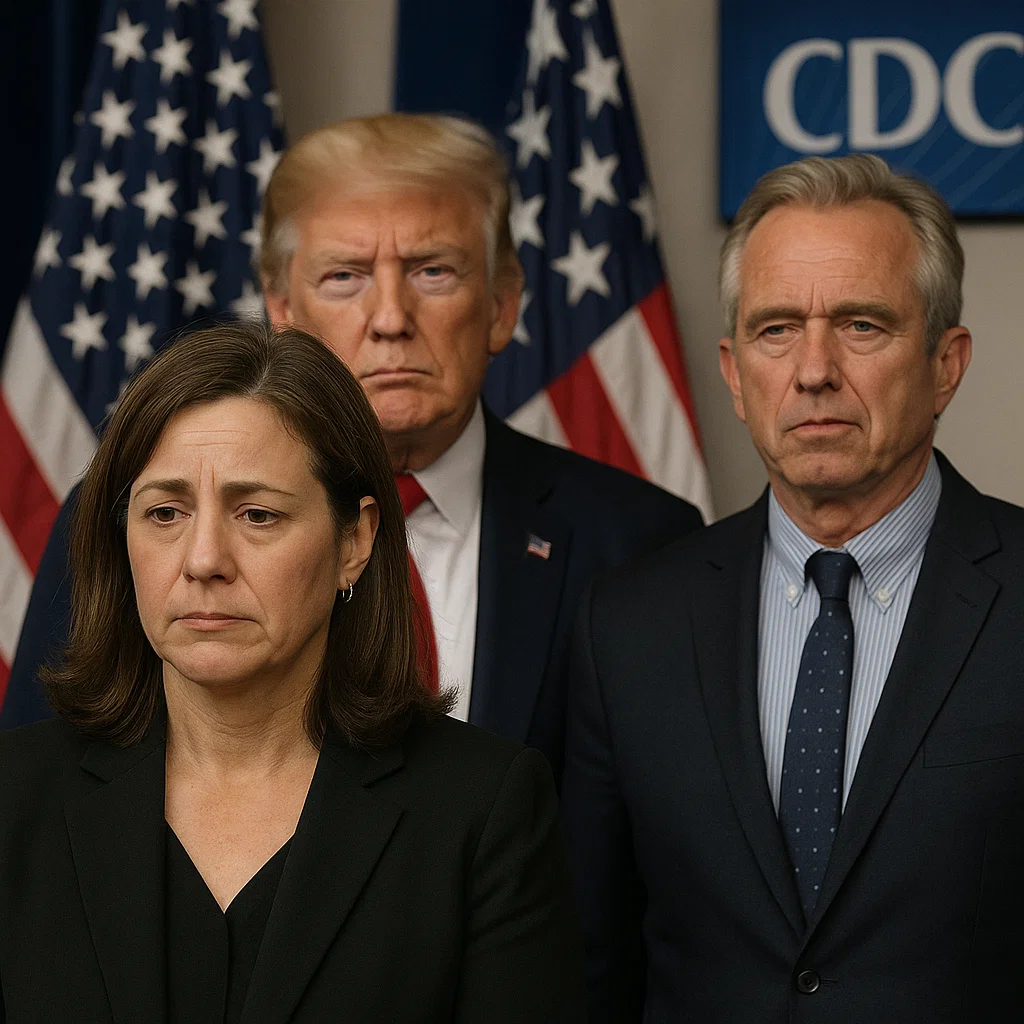
“I would never do that, as a scientist,” Susan Monarez says of being asked to approve changes to vaccine recommendations without knowing the details.

When Susan Monarez took the helm of the beleaguered US Centers for Disease Control and Prevention (CDC) in late July, she had her work cut out for her. Public trust in the agency had dropped considerably since the start of the COVID-19 pandemic. And US health secretary Robert F. Kennedy Jr, who oversees the CDC, had called the agency a “cesspool of corruption” that needed to be fundamentally rebuilt.
Less than a month into Monarez’s tenure, US President Donald Trump fired her. She had lost the trust of Kennedy, who only a month earlier had said he had “full confidence” in her ability to lead the agency and that she had “unimpeachable scientific credentials”.
This conflict spilled into public view when each presented their version of events to US senators at separate hearings on Capitol Hill in Washington DC. Monarez was dismissed, she said, for refusing to fire top scientists at the agency or pre-approve vaccine recommendations without first considering the relevant scientific data. Kennedy testified that Monarez had told him that she wasn’t trustworthy, so he ousted her.
Kennedy had also told Monarez that CDC employees were “killing children and they don’t care”, were “bought by the pharmaceutical industry” and “forced people to wear masks and social distance like a dictatorship”, she testified. These alleged comments came after a deadly shooting at the CDC headquarters in Atlanta, Georgia, soon after she became director. The gunman, who targeted the campus to protest COVID-19 vaccines, killed police officer David Rose and shattered some 150 windows.
The past few months, Monarez says, have included both “the highlights of my professional career” and the “absolute worst days of my life”. In an exclusive interview — her first since she became CDC director — she tells Nature about the consequential decisions that cost her the job and what’s next for public health in a politicized world.
The CDC director is an “inherently political position, but that doesn’t mean that it has to be politically compromised”, says Monarez, who is an immunologist and microbiologist. “The CDC is far too important to just give up on.”
Before our call, you sent me a photo that seems to be of you as a child with your father and siblings sitting on a tractor with a barn in the background. What was that about?
I grew up in rural America, in a family that didn’t have many resources — my dad was a dairy farmer. You live without expecting to have the privileges and material possessions that so many people have. We just knew that you worked hard. You got up early and you treated people with kindness. We lived at or below the poverty line for a long time.
My parents, they’re still alive, thankfully. But they’ve never been wealthy, and they don’t have the advantages of immediate access to high-quality health care, and so I see them still struggling today. When we’re talking in Washington DC, we have to remember that there are millions and millions of Americans like my parents. We can’t leave them behind.
Editor’s Note: The featured image was created by SORA. WP AI refused to make an image based on the article; seems likely just censorship, I wonder. –DrWeb
Continue/Read Original Article Here: Exclusive: ex-CDC director talks about why she was fired

Leave Your Comments