Over 1,500 Economists Agree: Trump’s Tariffs Are Terrible – Reason – April 24, 2025
DrWeb
·
Tariffs
Over 1,500 Economists Agree: Trump’s Tariffs Are Terrible
Reason interviewed five signatories of the Anti-Tariff Declaration to learn why they oppose tariffs and support free trade.
By Jack Nicastro | 4.24.2025 2:06 PM
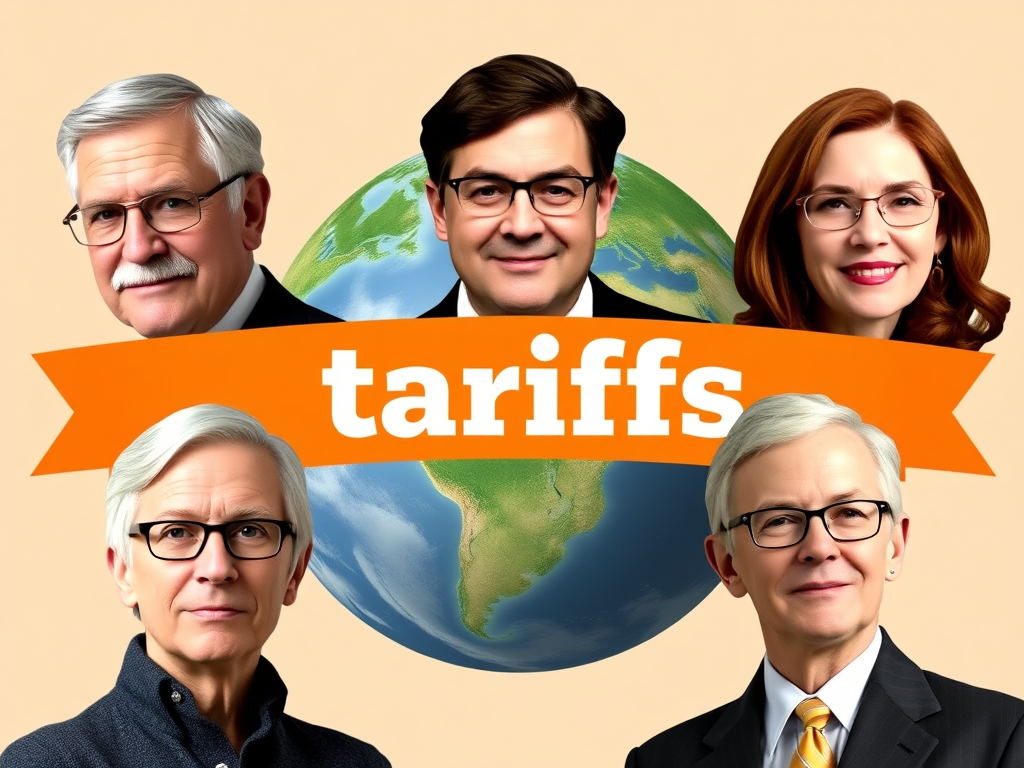
From left to right: David Henderson, Gregory Mankiw , Ben Powell, Deirdre McCloskey, Michael Munger against a tan background with a picture of the earth that has an orange banner across it that reads “tariffs” in white with a white ‘anti’ sign across it | illustration: Eddie Marshall | Hoover Institution | Harvard University | Independent Institute | Cato Institute | Duke University
When the Anti-Tariff Declaration was published on Friday, more than 150 economists signed on to oppose President Donald Trump’s trade policy. Less than a week later, the number of signatories increased by an order of magnitude. Reason spoke with five of the economists who signed the declaration about what motivated their decision.
N. Gregory Mankiw, professor of economics at Harvard University, tells Reason the most important takeaway from the declaration is that “economists are really united in opposition to the Trump international economic policy, [which] seems to be founded on a variety of very fundamental misconceptions about economics and economic history.”
Michael Munger, professor of economics and political science at Duke University, says he signed because “tariffs are bad domestic policy, and bad foreign policy.” Munger explains that the argument for free trade is unilateral: “If another country manipulates its currency, or has trade barriers, that is a harm to THEIR consumers. ‘Wealth’ is the ability to obtain high quality, low cost products.”
Munger hopes the declaration can play a role similar to a letter signed by 1,028 economists urging then-President Herbert Hoover to veto the Smoot-Hawley Tariff Act of 1930. The letter did not succeed in persuading Hoover to veto the bill, but it did help steer the U.S. toward free trade when its predictions were proven right, explains Munger.
Munger also identifies Trump’s inconsistent rationales for tariffs as being particularly catastrophic: “Almost ANYconsistent policy, even a bad one, can be worked around. But a policy of inconsistency is a disaster in the making.”



Leave Your Comments