-

·
People Are More Likely to Cheat When They Use AI | Scientific American
September 28, 2025, 4 min read People Are More Likely to Cheat When They Use AI Participants in a new study were more likely to cheat when delegating to AI—especially if they could encourage machines to break rules without explicitly asking for it By Rachel Nuwer edited by Allison Parshall Despite what watching the news…
-
·
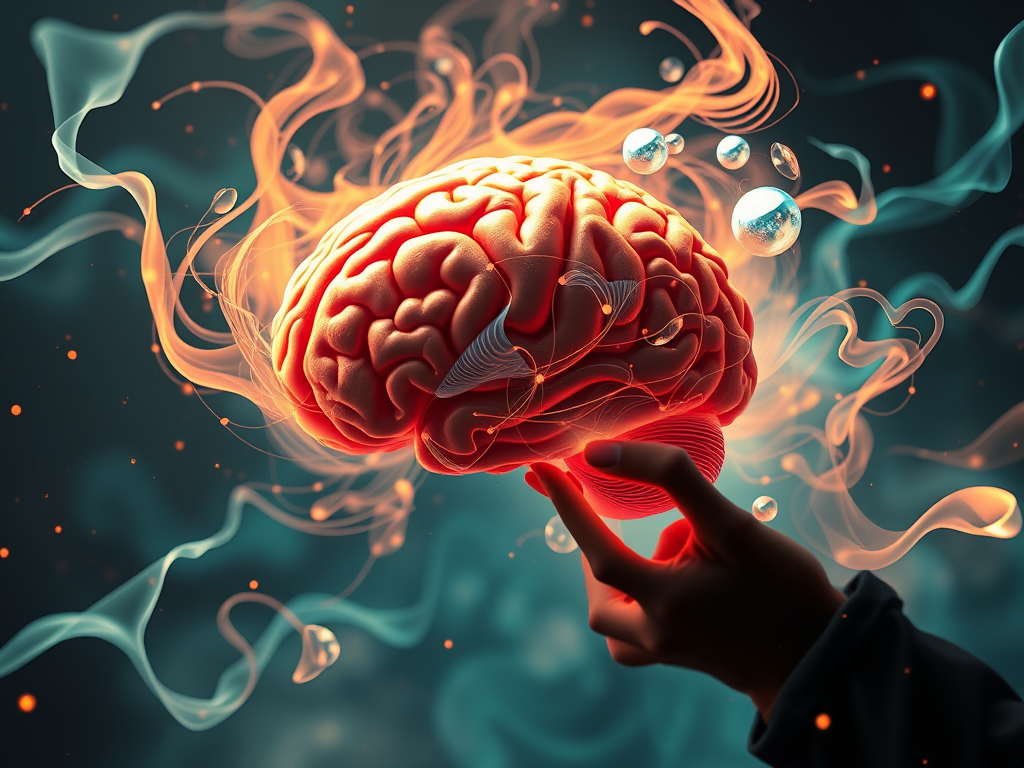
Daniel Yon Explains Why Your Brain Is a Brilliant Illusionist | Scientific American
September 12, 2025 How Your Brain Constructs—And Sometimes Distorts—Your Experience of the World In his new book, Daniel Yon explains how our brain is constantly constructing reality By Rachel Feltman, Fonda Mwangi & Alex Sugiura Rachel Feltman: For Scientific American’s Science Quickly, I’m Rachel Feltman. You probably think you’re listening to my voice right now.…
-

·
Meet the Woman Who Supervised the Computations That Proved an Atomic Bomb Would Work
Naomi Livesay worked on computations that formed the mathematical basis for implosion simulations. Despite her crucial role on the project, she is rarely mentioned as more than a footnote—until now By Katie Hafner, The Lost Women of Science Initiative on August 3, 2023 Listen to the podcast: https://beta.prx.org/stories/484826 Nic Lewis: She was walking past where Oppenheimer was…
-

·
Is the Alpha Wolf Idea a Myth? – Scientific American
The idea that wolf packs are led by a merciless dictator, or alpha wolf, comes from old studies of captive wolves. In the wild, wolf packs are simply families By Stephanie Pappas on February 28, 2023 If you’ve ever heard the term “alpha wolf,” you might imagine snapping fangs and fights to the death for dominance. The…
-

·
Space Elevators Are Less Sci-Fi Than You Think – Scientific American
I’ve been working on space elevators for almost 20 years, and though we still have issues to solve, we are getting closer to making them reality By Stephen Cohen on November 25, 2022 Space elevators are often dismissed as a science fiction dream, but I believe they will exist soon—perhaps in two or three decades. Throughout my…
-
·
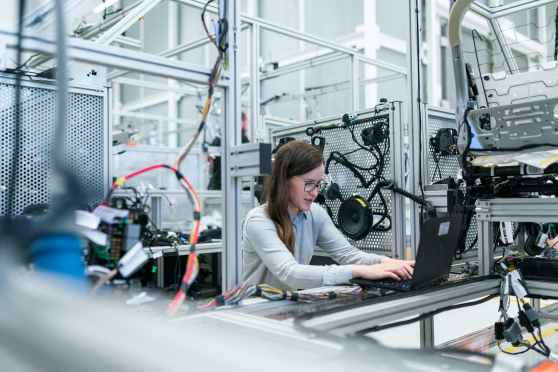
The Feminist Test We Keep Failing: Lost Women of Science Podcast, Season 3 Bonus Episode – Scientific American
There’s a test that we at Lost Women of Science seem to fail again and again: the Finkbeiner Test. By Katie Hafner, Carol Sutton Lewis, The Lost Women of Science Initiative on November 17, 2022 There’s a test that we at Lost Women of Science seem to fail again and again: the Finkbeiner Test. Named for the…
-
·
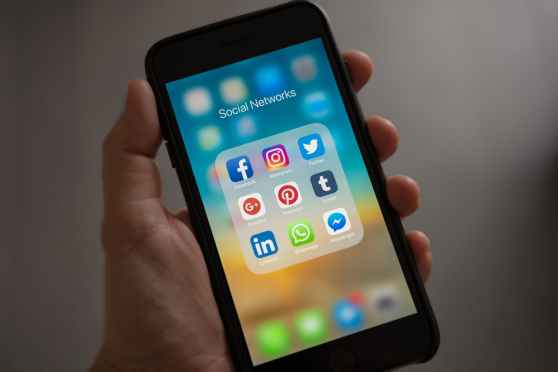
Why Social Media Makes People Unhappy–And Simple Ways To Fix It | Scientific American
Research suggests platform designs make us lose track of time spent on them and can heighten conflicts, and then we feel upset with ourselves By Daisy Yuhas, June 20, 2022 Disrupted sleep, lower life satisfaction and poor self-esteem are just a few of the negative mental health consequences that research has linked to social media.…
-
·
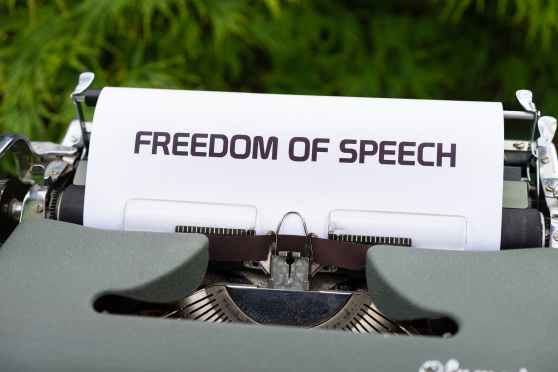
Science Must Not Be Used to Foster White Supremacy – Scientific American
It’s scientists’ responsibility to reveal the inherent biases of studies used to disparage Black people and other groups By Janet D. Stemwedel, May 24, 2022 The white supremacist who drove 200 miles to a Buffalo, N.Y., supermarket and opened fire, killing 10 people, had posted a screed. Most of the people he killed were Black.…
-

·
Astronomers Gear Up to Grapple with the High-Tension Cosmos – Scientific American
A debate over conflicting measurements of key cosmological properties is set to shape the next decade of astronomy and astrophysics By Anil Ananthaswamy, April 18, 2022 How fast is the universe expanding? How much does matter clump up in our cosmic neighborhood? Different methods of answering these two questions—either by observing the early cosmos and…
-

·
A Big Bet on Nanotechnology Has Paid Off – Scientific American
The National Nanotechnology Initiative promised a lot. It has delivered more By Chad Mirkin, October 9th, 2021 We’re now more than two decades out from the initial announcement of the National Nanotechnology Initiative (NNI), a federal program from President Bill Clinton founded in 2000 to support nanotechnology research and development in universities, government agencies and…
-

·
Looking for Interstellar Monuments – Scientific American
An ancient civilization from a distant star could have created immortal machines to roam the Milky Way and keep its legacy alive By Avi Loeb on September 11, 2021 By now I have reached an age at which my birthdays can be thought of as a countdown to the inescapable end. We live our life…
-

·
What Structural Engineers Learned from 9/11 – Scientific American
By Donald Dusenberry, on September 8, 2021 Members of the profession study such tragic events to try and ensure that something similar won’t happen again https://anchor.fm/drweb/embed/episodes/What-Structural-Engineers-Learned-from-911–Scientific-American-e17579v The events of 9/11 shook the world. Before that day, we could not imagine that someone would be bold and cruel enough to enact such violence. We could not…
