

Autopens, Executive Orders, and the Rule of Law
What really happens when one president tries to erase another’s signature?
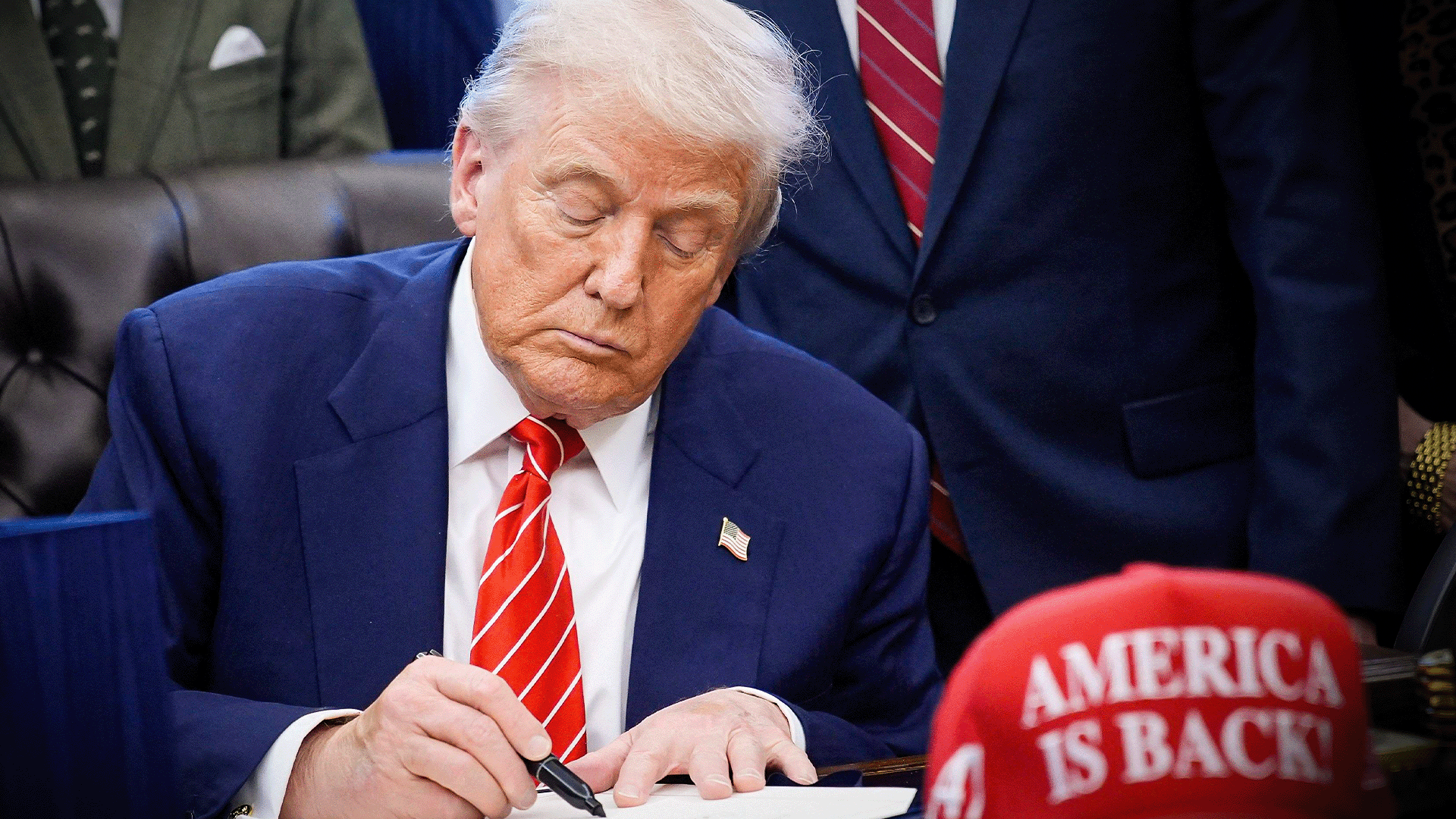
Donald Trump has announced that he is cancelling all executive orders and “anything else” from the Biden administration that were signed using an autopen, claiming those documents are invalid and even hinting at perjury charges if Joe Biden says he personally authorized them. The move has thrilled some supporters and outraged critics, but beneath the rhetoric is a basic question of law:
- Are autopen-signed executive orders legally valid?
- Can a sitting president simply declare them void?
On both counts, the short answer from mainstream legal analysis is: autopens are lawful, and Trump’s blanket cancellation theory is on very thin ice.
Editor’s Note: The analysis here is by Perplexity Plus, and my review and edits. Here’s a sample article that announces Trump’s actions. https://www.cbsnews.com/news/trump-cancels-biden-orders-signed-autopen –there are several. So let’s deep dive a bit…

What Trump Is Claiming
In recent statements and social posts, Trump has argued that a huge share of Biden’s executive actions were signed not by Biden’s own hand but by an autopen—essentially a mechanical signature device—and that these are therefore “null and void.” He has suggested that aides, not Biden, made the decisions and that if Biden now claims personal involvement he could face perjury charges.
That claim rests on two big leaps:
- That the physical act of handwriting the signature is required for legality;
- That using an autopen inherently proves the president wasn’t really the decision-maker.
Both propositions collide head-on with modern practice and with existing legal opinions from the Justice Department.
What Is an Autopen and Why Has It Been Used?
An autopen is a device that reproduces a person’s signature with real ink. It is not new, and it is not unique to Biden. Presidents from at least George W. Bush onward have authorized autopen signatures on official correspondence, and Barack Obama famously used an autopen to sign a Patriot Act extension while traveling abroad, based on prior legal clearance from the Department of Justice.
The core idea is simple: the decision must be the president’s; the ink stroke can be delegated to a machine, as long as it is done under his direction.
Are Autopen-Signed Orders Legal?
Yes. The key legal backdrop is a 2005 opinion from the Justice Department’s Office of Legal Counsel (OLC). In that memo, OLC concluded that the president may “sign” a bill within the meaning of Article I, Section 7 of the Constitution by directing a subordinate to affix his signature—explicitly including use of an autopen—so long as the president has made the underlying decision and authorized the signature.
That logic carries over to executive orders and other presidential instruments. The law cares about:
- Who made the decision? — The president cannot delegate the actual decision to approve or disapprove.
- How is that decision manifested? — The physical act of writing the name can be delegated or mechanized.
In other words, an autopen signature authorized by the president is treated as the president’s signature. The courts, Congress, and multiple administrations have proceeded on that assumption for nearly two decades. If Trump were to argue that autopen use is categorically invalid, he would be challenging not only Biden’s practice, but settled executive-branch legal interpretation and a bipartisan history of use—including his own administration’s reliance on mechanical signing for lower-stakes documents.
Can a President Revoke a Predecessor’s Executive Orders?
Here Trump’s position is on firmer, but still limited, ground. As a general rule, any sitting president may:
- Amend,
- Rescind, or
- Replace
executive orders issued by a prior administration, so long as he stays within constitutional and statutory limits. Executive orders are internal directives for the executive branch; they are not statutes and do not bind a successor president forever. That’s why one administration can undo or rewrite the regulatory priorities of another.
So, yes: Trump can revoke Biden-era executive orders as a matter of policy choice. We’ve already seen him move to roll back or rewrite specific Biden orders. Future litigation will focus on what he does in the substance of those revocations, not the mere fact that he did them.
What is novel—and shaky—is his attempt to tie the legality of those orders to the method of signature and to retroactively declare large swaths of them void because they were signed by autopen.
The Problem with Retroactive “Autopen” Invalidation
Trump’s announced approach tries to do something different from the normal policy-based revocation of executive orders. Instead of saying “I disagree with these policies and am replacing them,” he suggests:
These orders were never valid in the first place, because they were signed with an autopen, so I am cancelling them as illegal and potentially criminal.
That creates several rule-of-law problems:
- It contradicts existing legal guidance. OLC’s 2005 opinion and subsequent practices assume autopen signatures are valid when authorized by the president. Calling them inherently “forged” would require either repudiating that legal framework or proving that Biden never authorized the decisions.
- It is retroactive. For years, agencies, states, and private parties have relied on those Biden orders as valid. Retroactively invalidating them on a technicality invites chaos in programs, contracts, and rights that grew up under those orders.
- It is categorical, not case-by-case. Instead of alleging specific instances of fraud (“this particular order was not actually authorized by Biden”), the rhetoric paints nearly all autopen-signed actions as suspect. Courts usually prefer tailored remedies, not sweeping retrospective erasures.
- It looks politically targeted. The move singles out one predecessor, on a theory that—if truly accepted—would raise questions about other administrations’ autopen practices as well. The selectivity underscores the political, rather than legal, impulse.
How Would Courts Look at This?
If lawsuits follow—and they almost certainly would—courts are unlikely to start by deciding whether they like Biden or Trump. They will ask:
- Was the original executive order within the president’s lawful authority?
- Did the president (Biden) actually approve the action?
- Is the current president (Trump) acting within his authority in revoking or refusing to recognize the order?
On the first two questions, the existence of a longstanding OLC opinion and decades of executive practice with autopens will weigh heavily in favor of validity. On the third question, courts generally accept that presidents can revoke prior executive orders—but not that they can rewrite history to say those orders never legally existed if they were properly authorized at the time.
The Supreme Court has also shown institutional concern for stability in government operations. Even justices skeptical of “administrative overreach” have not shown much appetite for retroactively vaporizing large categories of past acts based on novel procedural theories. Doing so here could destabilize not only Biden-era orders but potentially any action signed via autopen going forward.
What About Pardons and Other Acts?
Trump and some allies have also gestured at Biden’s clemency decisions, suggesting that pardons or commutations bearing an autopen signature might be revisited. Here the law is even clearer:
- Once a valid presidential pardon is issued, it is generally understood to be final and irrevocable.
- The method of signature does not change the constitutional nature of the clemency power, so long as the decision was the president’s.
In practice, that means attempts to claw back already-granted pardons on an autopen theory would face extremely stiff resistance in court. Even legal scholars sympathetic to a strong executive are wary of letting a later president un-pardon people based on how the document was signed.
Politics, “Enemies,” and the Rule of Law
From a political perspective, the autopen narrative functions as another tool in a larger project: casting a predecessor as illegitimate or incapacitated and suggesting that their official acts are suspect on that basis. The language of “forgery,” “perjury,” and “null and void” is aimed less at administrative lawyers and more at a political audience already primed to see Biden as unfit.
From a rule-of-law perspective, that is precisely why the theory is dangerous. If every change of administration brought not only policy reversals but retroactive attacks on the very validity of the prior president’s signature, the stability of executive governance would be at risk. Agencies, states, businesses, and ordinary citizens would never know which actions are safe to rely on.
Healthy democratic accountability means we absolutely can argue over policies and revoke prior orders through lawful channels. But turning autograph style into a weapon against a former president’s entire record is a different move—and one that courts, if asked, may well decline to endorse.
Key Takeaways
- Autopens are legally recognized tools for presidential signatures, as long as the president makes and authorizes the underlying decision.
- Any sitting president can revoke prior executive orders as a policy matter, but cannot simply declare them historically void due to autopen use.
- Retroactively invalidating large categories of actions would create legal chaos and undercut reliance interests across government and society.
- Courts are likely to view broad “autopen invalidation” moves as politically motivated and legally weak, compared to ordinary, case-specific challenges.
- The real story is less about pens and more about power: who gets to define which presidential acts “count” when the political winds shift.
Editor’s Note
This essay is researched and sourced, with commentary and analysis, not legal advice. It reflects the public record on autopens, executive orders, and presidential practice as of late 2025, along with mainstream interpretations from constitutional scholars and legal observers, and the analysis and edits by the authors. –DrWeb & Perplexity
Sources & Further Reading (MLA 9)
- Justice Department, Office of Legal Counsel. “Whether the President May Sign a Bill by Directing That His Signature Be Affixed to It.” U.S. Department of Justice, 7 July 2005, https://www.justice.gov/olc/opinion/whether-president-may-sign-bill-directing-his-signature-be-affixed-it .
- Congressional Research Service. Executive Orders: An Introduction. 29 Mar. 2021, https://crsreports.congress.gov/product/pdf/IF/IF11032 .
- Bomboy, Scott. “Defining the President’s Constitutional Powers to Issue Executive Orders.” National Constitution Center, 29 Jan. 2025, https://constitutioncenter.org/blog/defining-the-presidents-constitutional-powers-to-issue-executive-orders .
- “Executive Orders.” American Bar Association – Public Education, 2021, https://www.americanbar.org/groups/public_education/resources/law_related_education_network/how_courts_work/executiveorders/ .
- “Judicial Review of Executive Orders.” Federal Judicial Center, https://www.fjc.gov/history/courts/judicial-review-executive-orders .
- Whelan, M. Edward III, et al. “Whether the President May Sign a Bill by Directing That His Signature Be Affixed to It.” Office of Legal Counsel Opinions, vol. 29, 2005, pp. 97–104. justice.gov .
- “Obama ‘Autopens’ Patriot Act Extension into Law.” CBS News, 27 May 2011, https://www.cbsnews.com/news/obama-autopens-patriot-act-extension-into-law/ .
- Turnipseed, Tony L. “The President and the Autopen.” Journal of Technology Law & Policy, vol. 17, 2012, https://scholarship.law.ufl.edu/jtlp/vol17/iss1/4/ .
- Associated Press. “Presidents Have Used Autopens for Decades. Now Trump Is Attacking Biden’s Use.” AP News, 17 Mar. 2025, https://apnews.com/article/biden-autopen-trump-executive-orders-00e8e0dfca0284 .
- “What Is an Autopen and Why Can’t Trump Stop Talking About It?” The Guardian, 29 Nov. 2025, https://www.theguardian.com/us-news/2025/nov/29/autopen-trump-biden-executive-orders .
- “Trump Says He Is Canceling All Biden Executive Orders Signed With Autopen.” The Wall Street Journal, 28 Nov. 2025, https://www.wsj.com/politics/policy/trump-biden-autopen-executive-orders .
- “Trump Threatens Biden with ‘Charges of Perjury.’” New York Post, 28 Nov. 2025, https://nypost.com/2025/11/28/news/trump-threatens-biden-over-autopen/ .
- “Legal Analysts React to Trump’s Plan to Terminate Biden Executive Orders.” Newsweek, 28 Nov. 2025, https://www.newsweek.com/trump-biden-autopen-legal-experts-react-1861234 .
- U.S. House of Representatives, Committee on Oversight and Accountability. The Biden Autopen Presidency: Decline, Delusion, and Deception in the White House. 24 Oct. 2025, https://oversight.house.gov/release/the-biden-autopen-presidency-report .
- “Reviewing Certain Presidential Actions.” The White House, 4 June 2025, https://www.whitehouse.gov/briefing-room/presidential-actions/2025/06/04/reviewing-certain-presidential-actions/ .
Discover more from DrWeb's Domain
Subscribe to get the latest posts sent to your email.