
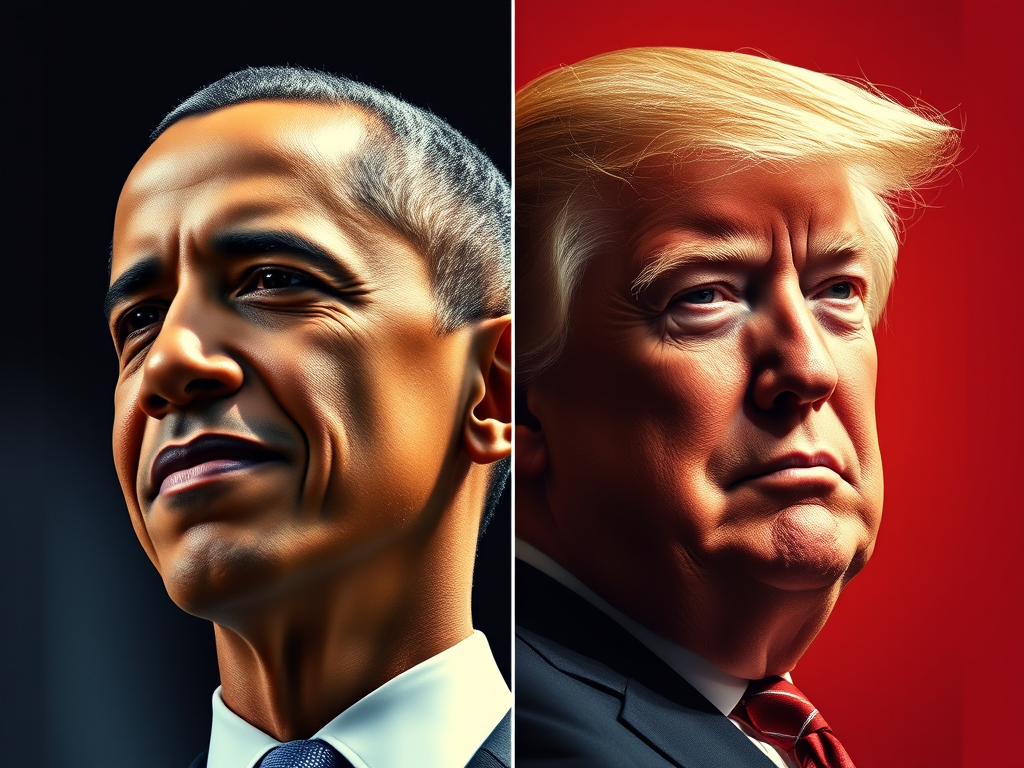
Editor’s Note: I wanted to compare our recent “Democratic Party” Presidents with the two Trump terms, one in just under a year in office.
The goals, achievements, and actions are striking in terms of serving American citizens and American Democracy. I was aided in my comparison project by Perplexity Pro, my right-hand AI for deep dive research. I have edited their work, edited to content, and published. I hope this shows you what we are facing, and why Midterms 2026 is so very important for America. — DrWeb

Progress by Presidents: Obama–Biden vs. Trump – A Comparison – 2025
Taken in total, the administrations of Barack Obama and Joseph R. Biden Jr. enacted policies that broadly advanced economic resilience, infrastructure, clean energy, health care access, and alliance leadership.
In obvious contrast, Donald J. Trump’s two non-consecutive terms emphasize tax cuts, deregulation, trade realignment, and a sharply different approach to democratic institutions and the rule of law, including power grabs for President, Executive Branch, and actions leaning towards authoritarianism, dictoratorship.
What We’re Measuring (and Why It Matters)
This post compares time in office, stated goals, and major actions with tangible effects on Americans. It looks at what has actually been passed, signed, or implemented—laws, executive actions, and policies—and how those choices affected people’s lives, rights, and security. This is our bottom line.. which Presidents have served Americans and America best, and most successfully.
Each factual claim is footnoted with public records: legislation on Congress.gov, federal data (BLS, BEA), and official executive-branch or diplomatic sources.
Barack Obama (Jan 20, 2009 – Jan 20, 2017)
Core Achievements & Effects
- Economic Rescue & Recovery: The American Recovery and Reinvestment Act helped stabilize jobs, state budgets, and key industries during the Great Recession.[1]
- Health Care Expansion: The Affordable Care Act expanded coverage, protected pre-existing conditions, and created exchanges and income-based subsidies.[2]
- Financial Stability & Consumer Protection: Dodd–Frank increased oversight of large financial institutions, derivatives, and created the Consumer Financial Protection Bureau.[3]
- Auto Industry & Manufacturing: A coordinated rescue of U.S. automakers and suppliers preserved large swaths of the industrial Midwest.[1]
- Global Leadership: The Iran nuclear agreement (JCPOA) and the Paris climate accord signaled a renewed multilateral approach (later reversed under Trump’s first term).[4]
Outcome Snapshot (end-of-term context)
- Unemployment fell from a 2009 peak of 10.0% to about 4.7% by January 2017, after years of steady recovery.[5]
- Health coverage increased by millions, driven by Medicaid expansion and marketplace enrollment in states that opted in.[2]
Joseph R. Biden Jr. (Jan 20, 2021 – Jan 20, 2025)
Core Achievements & Effects
- Pandemic Recovery & Households: The American Rescue Plan provided direct aid to families, schools, local governments, and small businesses as the country emerged from COVID-19 restrictions.[6]
- Infrastructure (Hard Assets): The Bipartisan Infrastructure Law funds upgrades to roads, bridges, ports, airports, broadband, water systems, and the electric grid—projects that will outlast any single administration.[7]
- Industrial Policy & Tech: The CHIPS and Science Act supports domestic semiconductor fabrication and advanced R&D hubs to reduce reliance on foreign supply chains.[8]
- Clean Energy & Health Costs: The Inflation Reduction Act accelerates clean-power deployment, supports domestic clean-energy manufacturing, extends ACA subsidies, and begins Medicare drug-price negotiations.[9]
- Veterans’ Health: The PACT Act expands care and benefits for veterans suffering from toxic-exposure (burn pits) injuries.[10]
- Alliances & Security: The administration worked through NATO and broader coalitions to respond to Russia’s full-scale invasion of Ukraine and increased coordination in the Indo-Pacific.[11]
Outcome Snapshot (through Jan 2025)
- Jobs & unemployment: After the pandemic spike, unemployment fell back to historically low levels (around 3.5–4%) during 2022–2023, with strong job creation reported in BLS data.[5]
- Manufacturing & energy investment: New semiconductor plants, battery factories, and clean-energy projects were announced or started construction in multiple states, tied directly to CHIPS and IRA incentives.[8][9]
Donald J. Trump (Jan 20, 2017 – Jan 20, 2021; Jan 20, 2025 – present)
Core Actions & Claims
- Tax Code Overhaul: The Tax Cuts and Jobs Act reduced the corporate tax rate and modified individual tax brackets and deductions; benefits skewed toward higher earners and corporations, according to independent analyses.[12]
- Trade Realignment: NAFTA was renegotiated into the USMCA, adjusting rules of origin and labor/environment provisions while keeping continental trade largely intact.[13]
- Deregulation: Executive Order 13771 set a “two regulations out for every one in” goal, framing a broad deregulatory posture in environmental, financial, and workplace safety rules (many later revised or reversed).[14]
- Criminal Justice: The First Step Act (2018) made targeted sentencing and re-entry reforms, expanding credits for some federal prisoners.[15]
- International Withdrawals: The administration withdrew from the Paris climate agreement and the Iran nuclear deal, and used tariffs widely, including against allies.[16]
Outcome Snapshot (first term)
- Unemployment reached 3.5% in late 2019, then spiked in 2020 due to the COVID-19 pandemic; it remained elevated (around 6.3%) at the end of his first term.[5]
- Policy durability was uneven: the USMCA and core corporate rate changes have endured; many regulatory actions were easily reversed by successor administrations.[12][13][14]
Authoritarian Tendencies & Democratic Backsliding Concerns
Where the contrast with Obama and Biden becomes most stark is not just in policy priorities but in the willingness to test or break unwritten democracy and democratic norms. The Trump administration implemented a “zero tolerance” policy at the southern border that led to systematic family separation—parents prosecuted and children held separately—drawing condemnation from medical groups, human-rights organizations, and where even federal courts intervened to mandate reunifications.[17]
In 2020, heavily armed federal officers were deployed to Portland and other cities over the objections of local officials, with reporting and lawsuits documenting the use of tear gas, impact munitions, and unmarked vehicles against protesters and bystanders.[18] Trump publicly threatened to invoke the Insurrection Act and “dominate” the streets, language more associated with internal enemies than fellow citizens. These episodes—combined with aggressive ICE enforcement practices that left immigrant communities in fear—felt less like standard law enforcement and more like the government turning its power inward on disfavored groups.
The post-2020 election period deepened those concerns. Trump pressed state officials to “find” votes, pushed false claims of fraud, and encouraged schemes involving fake electors and congressional disruptions. The bipartisan January 6 Committee documented how these efforts contributed to the January 6 attack on the Capitol, an event aimed at halting the peaceful transfer of power.[19] Those are not ordinary policy disputes; they are actions that many scholars describe as democratic backsliding or authoritarian in impulse, because they seek to retain power by discarding rules when they become inconvenient.
His second, non-consecutive term is ongoing at the time of this writing, but the pattern of rhetoric and intent—threats to “terminate” parts of the Constitution, promises to use the Justice Department against opponents, and calls to deploy federal power against political and cultural enemies—has only heightened fears that the basic constraints of American democracy are being treated as optional.
Quick Comparison (At a Glance)
| Policy Area | Obama + Biden (Democratic) | Trump (Republican) |
|---|---|---|
| Health Care | ACA enacted and expanded; IRA extends ACA subsidies and begins Medicare drug-price negotiation.[2][9] | ACA repeal failed; mandate penalty reduced to $0 via TCJA, weakening coverage incentives.[12] |
| Economy & Jobs | ARRA crisis stabilization; long recovery to low unemployment; post-COVID job gains with BIL/CHIPS/IRA investment incentives.[1][7][8][9][5] | Pre-COVID low unemployment; sharp pandemic spike; partial recovery by end of first term; second term still unfolding.[5] |
| Infrastructure/Industry | Bipartisan infrastructure law and CHIPS support long-term physical and industrial assets.[7][8] | USMCA updated North American trade; tariffs used extensively, producing mixed results and retaliatory measures.[13] |
| Climate/Energy | Paris re-engagement; IRA incentives for clean power, EVs, and domestic clean-tech manufacturing.[9] | Paris withdrawal; regulatory rollbacks favoring fossil fuels; many overturned or replaced by successors.[16] |
| Alliances/Foreign Policy | Reinforced NATO and multilateral efforts on Ukraine; emphasis on alliances and joint sanctions.[11] | USMCA and Abraham Accords on one side; confrontational stance with allies and withdrawals from key agreements on the other.[13][16] |
| Democratic Norms & Institutions | Accepts election outcomes; works within normal legislative and judicial channels; no attempts to overturn certified results. | Pressured state officials to change vote counts; promoted false fraud narratives; actions tied to January 6 attack and investigations into efforts to overturn the 2020 election.[19] |
Bottom Line Observations…
The Normal – Across twelve-plus combined Democratic years under Obama and Biden, federal policy focused on building and repairing systems—health insurance frameworks, financial safeguards, roads and bridges, supply chains, clean-energy infrastructure—and doing so through legislation, budget choices, and alliances. Those actions can be debated and criticized, but they sit within the familiar grammar of representative government: win power, pass laws, defend them in court, and adjust when voters say otherwise.
The Power Grabs – Trump’s record is different in kind, not just degree. On the one hand, he delivered a durable corporate tax cut (for his oligarch buddies) and a reworked trade agreement.
On the other, his terms feature unprecedented stress-tests of democratic norms: using immigration and law-enforcement tools in ways that terrorized communities, sending federal force into cities over local objections, and trying to cling to office by pressuring officials and amplifying lies about a certified election. That pattern—when taken together—is why so many citizens don’t experience this as “just another partisan presidency,” but as a slide toward something more authoritarian.
Americans, What do you Think? – The question this comparison leaves with the reader is simple: which direction, looking at the record, looks more like democratic progress, and which looks like the state turning against its own system? Below, before the bibliography, use our special feedback form to share your thoughts! Please let me know your thoughts on this post, or the blog, in this special feedback comment form. Thanks! –DrWeb
Sources (MLA)
- United States, Congress. American Recovery and Reinvestment Act of 2009. Public Law 111-5, 17 Feb. 2009. Congress.gov, https://www.congress.gov/111/plaws/publ5/PLAW-111publ5.pdf. Accessed 10 Nov. 2025.
- United States, Congress. Patient Protection and Affordable Care Act. 23 Mar. 2010. Congress.gov, https://www.congress.gov/bill/111th-congress/house-bill/3590. Accessed 10 Nov. 2025.
- United States, Congress. Dodd–Frank Wall Street Reform and Consumer Protection Act. 21 July 2010. Congress.gov, https://www.congress.gov/bill/111th-congress/house-bill/4173. Accessed 10 Nov. 2025.
- U.S. Department of State. “The Paris Agreement” and “Joint Comprehensive Plan of Action.” state.gov, https://www.state.gov/paris-agreement/ and https://www.state.gov/joint-comprehensive-plan-of-action-jcpoa/. Accessed 10 Nov. 2025.
- U.S. Bureau of Labor Statistics. “Civilian Unemployment Rate (Series LNS14000000).” BLS.gov, https://www.bls.gov/charts/employment-situation/civilian-unemployment-rate.htm. Accessed 10 Nov. 2025.
- United States, Congress. American Rescue Plan Act of 2021. 11 Mar. 2021. Congress.gov, https://www.congress.gov/bill/117th-congress/house-bill/1319. Accessed 10 Nov. 2025.
- United States, Congress. Infrastructure Investment and Jobs Act. 15 Nov. 2021. Congress.gov, https://www.congress.gov/bill/117th-congress/house-bill/3684. Accessed 10 Nov. 2025.
- United States, Congress. CHIPS and Science Act of 2022. 9 Aug. 2022. Congress.gov, https://www.congress.gov/bill/117th-congress/house-bill/4346. Accessed 10 Nov. 2025.
- United States, Congress. Inflation Reduction Act of 2022. 16 Aug. 2022. Congress.gov, https://www.congress.gov/bill/117th-congress/house-bill/5376. Accessed 10 Nov. 2025.
- United States, Congress. Sergeant First Class Heath Robinson Honoring our PACT Act of 2022. 10 Aug. 2022. Congress.gov, https://www.congress.gov/bill/117th-congress/house-bill/3967. Accessed 10 Nov. 2025.
- The White House. “Fact Sheets on U.S. Support for Ukraine and NATO.” whitehouse.gov, https://www.whitehouse.gov/briefing-room/statements-releases/. Accessed 10 Nov. 2025.
- United States, Congress. Tax Cuts and Jobs Act. 22 Dec. 2017. Congress.gov, https://www.congress.gov/bill/115th-congress/house-bill/1. Accessed 10 Nov. 2025.
- Office of the United States Trade Representative. “United States–Mexico–Canada Agreement (USMCA).” USTR.gov, https://ustr.gov/usmca. Accessed 10 Nov. 2025.
- United States, President. “Executive Order 13771—Reducing Regulation and Controlling Regulatory Costs.” Federal Register, 3 Feb. 2017, https://www.federalregister.gov/documents/2017/02/03/2017-02451/reducing-regulation-and-controlling-regulatory-costs. Accessed 10 Nov. 2025.
- United States, Congress. First Step Act of 2018. 21 Dec. 2018. Congress.gov, https://www.congress.gov/bill/115th-congress/senate-bill/756. Accessed 10 Nov. 2025.
- The White House (Trump Archives). “Statement by President Trump on the Paris Climate Accord” and “Remarks on the Joint Comprehensive Plan of Action.” trumpwhitehouse.archives.gov, https://trumpwhitehouse.archives.gov/briefings-statements/statement-president-trump-paris-climate-accord/ and https://trumpwhitehouse.archives.gov/briefings-statements/remarks-president-trump-joint-comprehensive-plan-action/. Accessed 10 Nov. 2025.
- U.S. Department of Justice, Office of the Inspector General. “Review of the Department of Justice’s Planning and Implementation of Its Zero Tolerance Policy and Its Coordination with the Departments of Homeland Security and Health and Human Services.” Jan. 2021, oig.justice.gov. Accessed 10 Nov. 2025.
- U.S. Senate Committee on Homeland Security and Governmental Affairs. “Examining the Federal Response to Protests in Portland, Oregon.” Hearing record, 2020. See also ACLU and press documentation of federal deployments in Portland. Accessed 10 Nov. 2025.
- Select Committee to Investigate the January 6th Attack on the United States Capitol. Final Report. U.S. House of Representatives, 2022, https://www.govinfo.gov/app/details/GPO-J6-REPORT. Accessed 10 Nov. 2025.
Discover more from DrWeb's Domain
Subscribe to get the latest posts sent to your email.