
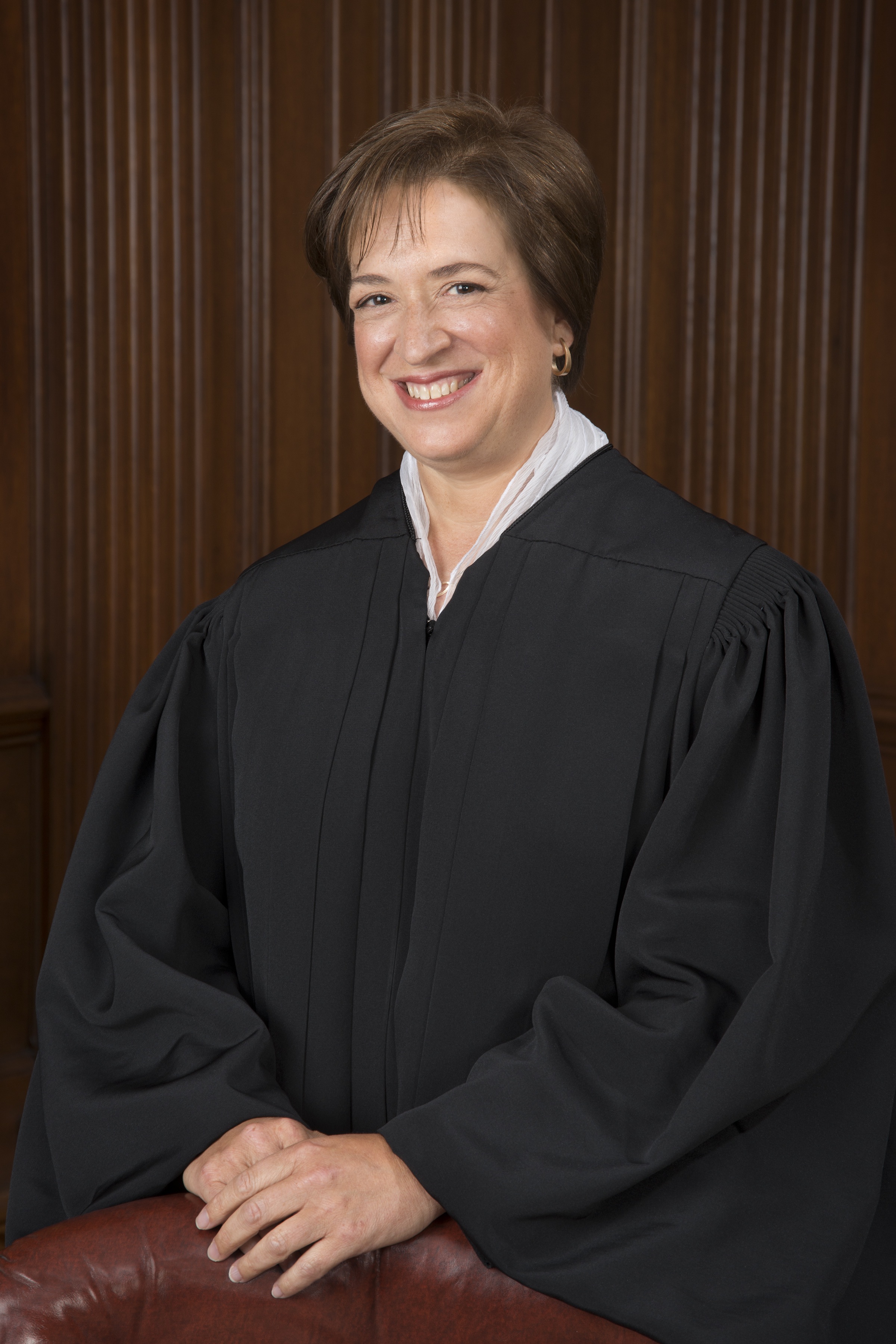

Associate Justice Elena Kagan: Pragmatist and Institutional Steward
Appointed by President Barack Obama; confirmed Aug. 5, 2010; sworn Aug. 7, 2010.[1]
Early Life & Education
Elena Kagan was born April 28, 1960, in New York City. She graduated from Princeton (A.B., 1981), earned an M.Phil. at Oxford’s Worcester College (1983), and received her J.D. from Harvard Law School (1986).[1]
Professional Path
Kagan clerked for Judge Abner Mikva (D.C. Circuit) and Justice Thurgood Marshall, practiced and taught law, served in the Clinton White House Counsel’s Office, and became Dean of Harvard Law School (2003–09). She was the first woman Solicitor General of the United States (2009–10) before joining the Court.[1][2]
Judicial Philosophy & Style
Kagan is widely viewed as a pragmatic, center-left institutionalist. Her opinions emphasize text, precedent, workable rules, and the real-world consequences of doctrine. She often writes accessible, coalition-minded opinions or dissents aimed at preserving stability and clarity in the law.[3]
Selected Opinions & Contributions
- Cooper v. Harris (2017) — Majority opinion striking down racially gerrymandered districts in North Carolina, clarifying evidentiary burdens in racial gerrymandering cases.[4]
- Rucho v. Common Cause (2019) — Dissent arguing partisan gerrymandering claims are justiciable and threatening to democratic accountability.[5]
- Kisor v. Wilkie (2019) — Concurrence shaping limits of Auer deference while preserving core administrative-law guardrails.[6]
Voting Record & Tendency
Kagan typically aligns with the Court’s liberal wing on civil rights, election law, and administrative-law moderation, yet she frequently appears in majorities due to coalition-building and pragmatic reasoning.[3]
Role on the Trump-Era Court
In Donald Trump’s second term, the conservative supermajority has repeatedly expanded presidential power, particularly over independent agencies and the federal workforce, often through the emergency docket. Kagan has emerged as a leading critic of this trend. In dissents to emergency orders and major merits cases, she argues that:
- Congress, not the president alone, should control how agencies are structured and how their leaders can be removed.
- Large shifts in federal power should not be made through unexplained emergency orders.
- Weakening voting rights and dismantling regulatory protections threatens the democratic system the Court is meant to safeguard.
Bottom line: Justice Kagan is the Court’s institutionalist liberal voice—focused on protecting democracy, preserving Congress’s role, and insisting that the Supreme Court explain itself openly when it makes decisions that reshape American law and government.
Sources (MLA)
- “Elena Kagan.” Oyez, http://www.oyez.org/justices/elena_kagan. Accessed 8 Dec. 2025.
- “Elena Kagan—Biography.” Supreme Court of the United States, http://www.supremecourt.gov/about/biographies.aspx. Accessed 8 Dec. 2025.
- “Does Justice Kagan Stand Alone?” SCOTUSblog, 8 July 2025, http://www.scotusblog.com/2025/07/does-justice-kagan-stand-alone/.
- Cooper v. Harris, 581 U.S. 285 (2017). Case summary: Oyez, http://www.oyez.org/cases/2016/15-1262.
- Rucho v. Common Cause, 588 U.S. 684 (2019). Case summary: Oyez, http://www.oyez.org/cases/2018/18-422.
- Kisor v. Wilkie, 588 U.S. 558 (2019). Case summary: Oyez, http://www.oyez.org/cases/2018/18-15.
Discover more from DrWeb's Domain
Subscribe to get the latest posts sent to your email.