

Teaching with the Library Primary Sources & Ideas for Educators
ISSN 2691-6916
- Home
- Declaring War on Japan in 1941: Challenging Students to Explore Multiple Perspectives on a Presidential Speech to Congress

Declaring War on Japan in 1941: Challenging Students to Explore Multiple Perspectives on a Presidential Speech to Congress
September 29, 2025, Posted by: Cheryl Lederle
Stacie Moats of the Library of Congress contributed to this article.
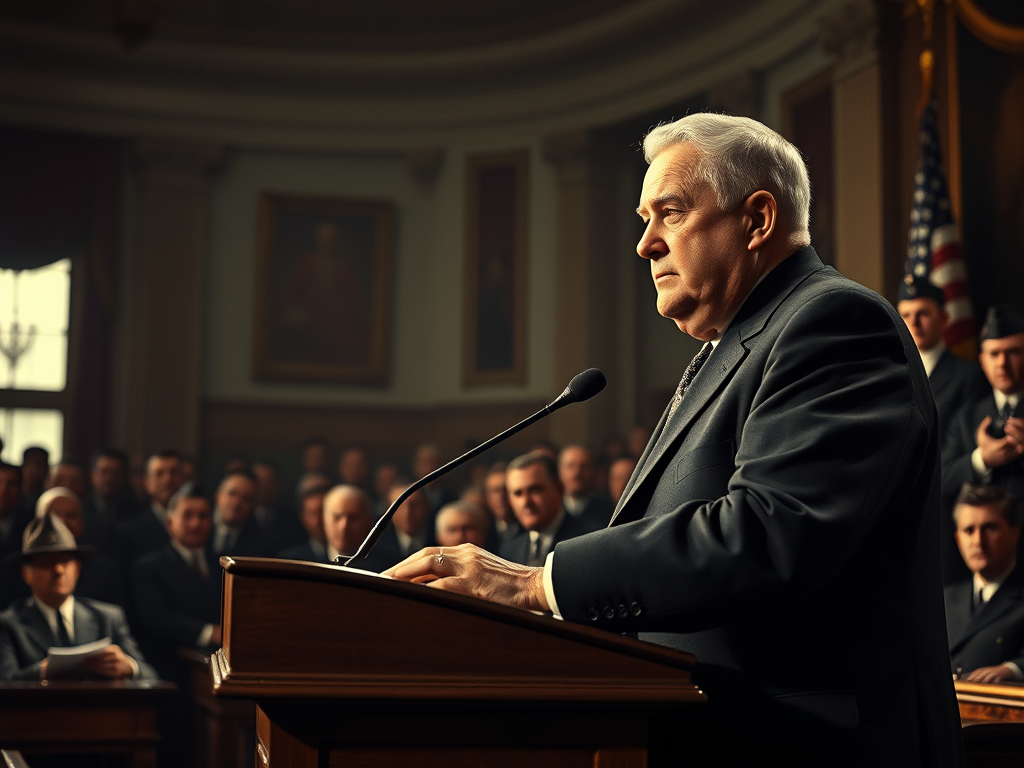
In the September 2025 issue of Social Education, the journal of the National Council for the Social Studies, our “Sources and Strategies” article features Franklin Delano Roosevelt’s speech to both chambers of Congress and the Supreme Court on December 8, 1941. The article asks: How did the U.S. Constitution, signed on September 17, 1787, influence the nation’s reaction to an event more than 150 years later? It introduces multiple sources reflecting the reactions of the president, Congress, and the American people to the 1941 Japanese attack on Pearl Harbor and invites students to consider how the founding document shaped the various responses.

One place to read President Roosevelt’s famous 1941 speech is in the Congressional Record (CR), Bound Edition, available from Congress.gov. The address narrates details of the bombing of Pearl Harbor and concludes with a call to action, asking “… that the Congress declare that, since the unprovoked and dastardly attack by Japan on Sunday, December 7, a state of war has existed between the United States and the Japanese Empire.”
In addition to the speech, the Bound CR offers an almost play-by-play account of what happened in the House and Senate on December 8. Examining this record can help students learn about the specific response to the events of that historic day, the responsibilities of each branch of government, and the rules governing the work of the House and the Senate.
After the president’s address, each chamber reconvened and read joint resolutions declaring war on Japan per Roosevelt’s request, followed by statements and discussion on the floor, and then a vote in each chamber. Discussion in the Senate was brief and confined to one senator. Discussion on the floor of the House reflected the tone and direction of the final vote, with only one “No” vote against the resolution and against declaring war. Depending on the time available, assign or ask students to select one representative’s remarks, identifying the position taken and arguments presented. Before they begin, remind them that the Bound CR is a direct record of a historic event, reflects the attitudes, perspectives, and beliefs of a different time, and students may find the content offensive.
Even within Congress, students will notice multiple perspectives and may wonder if these congressional dialogues represented the conversations taking place across the nation. The article features a number of interviews from After the Day of Infamy: “Man-on-the-Street” Interviews Following the Attack on Pearl Harbor, including:
Listening to these Americans express their thoughts can help students better understand the real-life political, economic, social, and emotional consequences of Congress invoking its constitutional power to declare war at the request of the president.
The article suggests that students seek additional perspectives through historical resources in the Library’s collections, including:
- Dear Mr. President,
- Chronicling America,
- Japanese-American Internment Camp Newspapers,
- Ansel Adams’ Photographs of Japanese-American Internment at Manzanar, and
- Veterans History Project.
Let us know what your students wonder and discover if you use any of these resources.
Continue/Read Original Article: https://blogs.loc.gov/teachers/2025/09/declaring-war-on-japan-in-1941-challenging-students-to-explore-multiple-perspectives-on-a-presidential-speech-to-congress/
Discover more from DrWeb's Domain
Subscribe to get the latest posts sent to your email.