

🇺🇸 From Pits to Patios: My Look Back at the American Backyard
By DrWeb | DrWeb’s Domain

There’s something about stepping out the back door on a warm evening, hearing the clink of a spatula against a grill, and catching the scent of something smoky drifting across the yard. For many of us, the backyard has been more than just a stretch of grass — it’s been a stage for summer rituals, neighborhood gatherings, firelit evenings, and quiet moments. It’s where we celebrated life’s small things.
I’ve been thinking about how that space came to mean so much, not just for me, but across the country. So here’s a look — part memory, part history — at the evolution of the American backyard from the 1950s to now.
🏘️ After the War: The Backyard Takes Shape
The story starts after World War II, when America was building homes faster than ever. With the GI Bill making homeownership possible for returning servicemen, suburbs sprang up almost overnight — rows of single-family houses, each with its own lawn and, crucially, its own backyard.

That backyard wasn’t just leftover space. It was intended. Architects and developers saw it as an extension of the home — a place where families could enjoy the outdoors without leaving the property. For many families, it was their first real taste of outdoor privacy.
I can still picture those early yards: modest, green, dotted with folding lawn chairs, charcoal grills, maybe a swing set. It wasn’t fancy — but it was ours.
🔥 Grills, Dads, and the Golden Age of BBQ
No story about American backyards would be complete without the barbecue. Cooking over fire wasn’t new, of course — it goes back to Indigenous traditions, Southern pitmasters, and frontier campfires — but in the 1950s, it got a shiny new identity.

In 1952, a guy named George Stephen turned a marine buoy into the first Weber kettle grill, and suddenly, backyard grilling became accessible to everyone. That round, vented grill became a fixture. And with it came the grill master: usually dad, spatula in one hand, drink in the other, flipping burgers with pride.
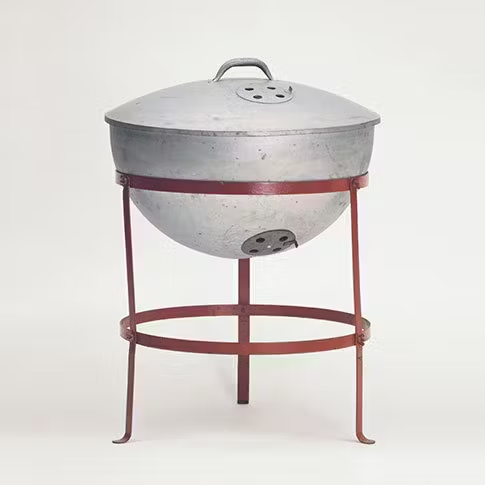
I remember those scenes well — the smoky air, the sound of kids running barefoot on the lawn, the folding table stacked with buns and condiments. It was ritual. You didn’t need a holiday — the smell of charcoal was enough reason to gather.
It wasn’t just the food — it was the feeling. And it lasted long after the grill cooled.
🪵 Fire Pits: The Glow That Brings Us Back
At some point, it wasn’t just about the meal. We started lingering longer outside, gathering after dark, often around fire. Early backyard fire features were built-in — stone or brick hearths that looked like mini fireplaces. But by the ’90s, portable fire pits started popping up in yards across the country.

I’ve always thought there’s something deeply human about sitting around a fire. We talk more freely, we stare into the flames, we roast marshmallows whether we’re 8 or 80. Even today, when I see that flicker in someone’s backyard, I know they’re doing something right.
That firelight brings people together. It warms up chilly evenings and keeps conversations glowing well into the night.
🏡 More Than Grass: Life Happened Out Back

The backyard wasn’t just a place for grilling. It was a place to play, to experiment, to rest. We had swing sets, kiddie pools, badminton nets, croquet hoops, and for a dangerous moment — lawn darts. Some folks had gardens. Others built treehouses or set up screens for backyard movie nights. Or, open the garage door, pop open some folding lawn chairs, and enjoy the night air, and neighbors strolling by outdoors, waving “Hi” as they passed.
In the 1960s and 70s, the backyard got more exotic. Tiki culture brought Polynesian flair to the suburbs — think bamboo furniture, torches, fruity cocktails in coconuts. The “luau” party craze took hold, and we leaned into it with gusto.
It was playful, a bit cheesy — but fun. And it reflected how the backyard had become something more than utilitarian. It was now a place of style, escape, even fantasy.
📅 Today’s Yards, Yesterday’s Spirit
Today, backyards look different. We’ve got smart lights, propane fire tables, Bluetooth speakers, pizza ovens, and string lights that rival city sidewalks. But even with the upgrades, I think the spirit is the same.

We still gather there. We still grill. We still wave to neighbors and sit outside after dinner just because. During the pandemic, when being indoors felt suffocating, the backyard saved us. It became a safe zone — a little patch of freedom. And, perhaps more important now, too.
Sometimes it’s the front yard now, or even the garage with the door open and chairs in the driveway. But the impulse is the same: come outside, sit awhile, let life happen.
🧭 Looking Back, Looking Around
What’s so beautiful about all of this is how ordinary it is. We don’t usually think of backyards as cultural symbols. But they are. They tell stories — about postwar dreams, domestic life, food and fire, and what it means to slow down.
Whether it’s the clatter of ice in a glass, the flick of a lighter, or the smell of charcoal, these details stay with us. They’re part of what shaped generations — mine included.
So here’s to the backyard. May the grass stay green, the coals stay hot, and the chairs never be empty for long. –DrWeb
📚 Further Reading & Sources
- Smithsonian Gardens: The Invention of the American Backyard
- Library of Congress: Beyond Barbecue
- Reminder Media: History of the Backyard BBQ
- Arts & Crafts Homes: Outdoor Hearths
- Internet Archive: Search “1950s backyard barbecue” or “home movie”
Have a backyard memory of your own? Drop it in the comments or tag @DrWebsDomain. I’d love to see how others remember their space.
Discover more from DrWeb's Domain
Subscribe to get the latest posts sent to your email.